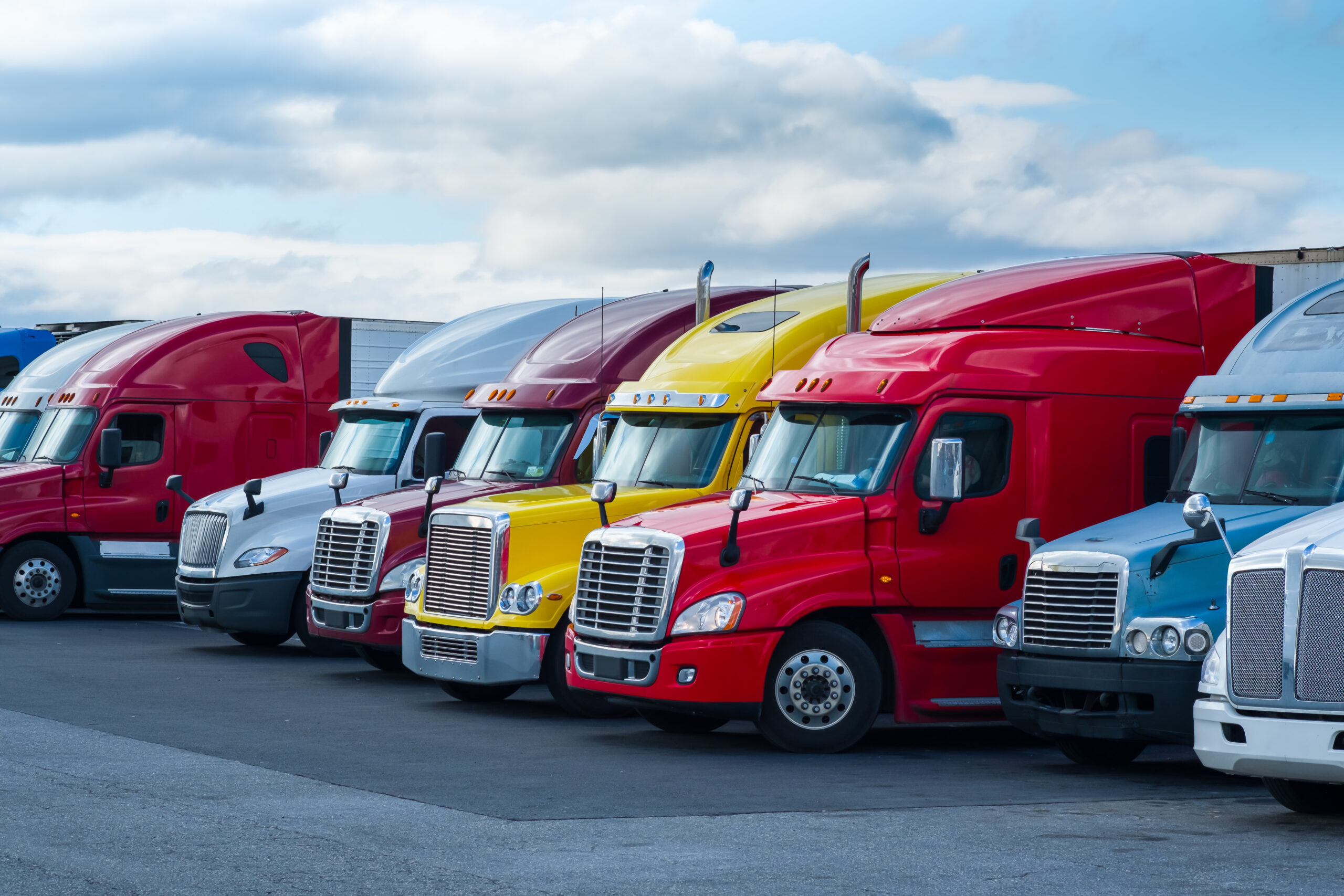
Why Heavy Trucks Are Tough on Commercial Asphalt
Every day, delivery semis, garbage trucks, buses, and service vehicles roll across commercial asphalt lots across southeast Wisconsin and northeast Illinois. These heavy vehicles bring customers, inventory, and revenue. They also bring concentrated stress that can cut pavement life short if your lot is not designed and maintained for high loads. If you manage a facility in Kenosha, Racine, or the Waukegan area, understanding how truck traffic affects your commercial pavement will help you plan smarter and spend less over the life of your lot.
Armored Asphalt has seen the full picture on truck wear. A single fully loaded truck axle can equal the pavement impact of thousands of cars. Repeated passes in the same lanes near docks, dumpsters, and drive-thrus cause ruts, cracks, and potholes to form faster. With the right design, maintenance plan, and timely repairs, your commercial asphalt can stand up to these demands and last longer with fewer costly disruptions.
How Truck Loads Damage Pavement Structure
Most commercial asphalt failures in truck areas are not random. They follow basic pavement mechanics that can be managed with good design and maintenance decisions. Here are the top ways heavy vehicles stress your lot:
- High axle loads cause deeper bending of the asphalt layers and base, which speeds up fatigue cracking under the surface. Those tiny cracks eventually show up as alligator cracking and potholes.
- Turning, braking, and slow maneuvers shove the surface layer sideways. This creates ruts, shoving, and ripples near stop bars, intersections, dock approaches, and dumpster pads.
- Repeated wheel paths in narrow lanes, like behind stores or around buildings, channel loads into the same tracks. The result is early rutting and depressions that hold water.
- Fuel, oil, and hydraulic leaks soften asphalt binders at the surface. This weakens the top layer, making it easier for truck tires and plow blades to tear away aggregate.
- Freeze and thaw amplify damage by letting water enter cracks and expand, which breaks apart the pavement from the inside out.
When the underlying base is thin, poorly compacted, or wet, the stress from heavy trucks leads to faster settlement. Over time, you see dips and waves in travel lanes, uneven joints, and cracks that spread along the same patterns trucks follow each day.
Common Truck-Related Distresses in Commercial Asphalt
Managers and owners can spot early warning signs of truck wear if they know what to look for. Addressing these distresses quickly can save thousands compared to full-depth replacement later.
- Rutting in wheel paths, especially at loading docks and site entrances
- Alligator cracking where trucks turn or stop
- Shoving or rippling near stop bars and at corners of tight aisles
- Potholes that reappear in the same spots every spring
- Edge breakdown along narrow drive lanes and shoulders
- Fuel or oil stains that cause soft spots and raveling
- Depressions at catch basins that hold water and ice
- Heaving and settlement at joints between new and old asphalt patches
If you see several of these symptoms where heavy vehicles travel most, it is time for a professional assessment. Armored Asphalt can evaluate your lot and build a plan that fits your traffic patterns and budget.
The Real Cost of Ignoring Truck Damage
Delaying repairs on a truck-heavy site is expensive. What starts as a small crack can turn into an unsafe pothole after a few freeze-thaw cycles. Once water gets below the surface, the base loses strength and the repair grows wider and deeper each season.
- Repair costs grow quickly when damage extends into the base or subgrade.
- Emergency pothole repairs and unplanned downtime disrupt customers, deliveries, and tenants.
- Liability rises when puddles freeze, wheelchairs jolt over failed patches, or carts get stuck in ruts.
- Plow operators struggle to clear snow on rutted or broken pavement, which leaves behind packed snow and ice.
A proactive plan costs less than years of reactive patching. For high-load areas, thoughtful design and routine maintenance can add many years of dependable service to your commercial asphalt.
Design Choices That Help Commercial Asphalt Stand Up to Trucks
If you are building new pavement or planning a major rehabilitation, the design phase is your best chance to make a truck-tough lot. Armored Asphalt helps business owners and property managers in Kenosha, Pleasant Prairie, Racine, and northern Illinois choose cost-effective designs that match their traffic needs.
- Thicker asphalt sections in truck lanes and loading docks, often one to two extra inches above car-only areas
- High-quality base stone with proper thickness and compaction to prevent settlement
- Mix designs with stiffer binders, larger aggregate, and higher stability for turning and braking areas
- Full-depth asphalt in extreme load zones, or concrete pads at dumpster enclosures and dock aprons to resist point loads
- Stronger edges, curb support, and widened lanes where truck tires track near boundaries
- Underdrains or improved drainage where water ponds or where soils stay wet
- Smooth transitions and strong joints to avoid stress points where new meets old
A smart layout can also reduce wear. Separate truck and car traffic when possible, provide generous turning radii, and create clear pathways so heavy vehicles do not grind tight corners every time they move.
Maintenance Strategies for High-Load Commercial Asphalt
Even the best designs need care. A structured maintenance plan will keep your pavement tight, sealed, and safe, especially in areas where trucks work hardest. Armored Asphalt builds maintenance schedules that match each property’s use and condition.
- Annual inspection before winter. Find and repair small cracks and open seams before freeze-thaw begins.
- Crack filling with high-grade rubberized material. Armored Asphalt fills working cracks to block water, then follows with sealcoating for a tight surface seal.
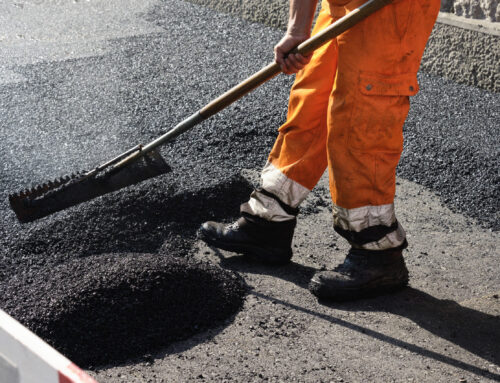
- Hot mix patching for structural repairs. Use hot mix asphalt to cut, clean, and patch damaged areas for a long-term fix. Cold patch is available as a temporary winter solution. Armored Asphalt can patch areas up to 10″ x 20″ with speed and precision.
- Sealcoating on a two-coat schedule. A quality two-coat system restores protection against UV, water, and salt. With the right timing, sealcoating helps pavement last twice as long between sealing.
- Targeted mill and pave in rutted truck lanes. Milling and resurfacing only the wheel paths or lane segments that rut reduces cost while restoring a smooth ride.
- Prompt oil spot treatment. Clean and prime fuel and oil stains so the new material bonds and stays stable.
- Sweeping and drainage upkeep. Keep catch basins clear and surfaces clean to reduce standing water and grit that grinds the surface.
- Pavement striping and traffic control. Clear lines help drivers stay in designed paths, which prevents new damage to edges and landscaped areas.
Armored Asphalt coordinates these steps around your schedule so your tenants, customers, and suppliers experience less disruption.
Winter Adds Extra Stress in Wisconsin and Illinois
Commercial asphalt in our region faces harsh winters that magnify truck wear. Freeze-thaw cycles pry open small cracks, deicers pull moisture into the surface, and plows scrape weakened areas. Armored Asphalt’s winter approach helps your lot survive the season and start spring in better shape.
- Rubberized crack filling before winter to keep water out
- Careful plowing techniques and clear markings to protect curbs, islands, and edges
- Timely temporary cold patch for dangerous potholes when hot mix plants are closed
- Strategic snow pile placement away from weak areas and catch basins
- Spring assessment to plan hot mix repairs and sealcoating once temperatures allow
Armored Asphalt also offers commercial snow plowing in Kenosha, Pleasant Prairie, and Racine. Keeping your drives, lots, and sidewalks clear reduces freeze-thaw damage and keeps your site safe for every visitor.
How Armored Asphalt Protects Your Investment
Armored Asphalt is a local team based in Kenosha that serves southeast Wisconsin and northeast Illinois. We bring a complete service lineup that keeps commercial asphalt strong in high-traffic conditions. If you need paving, patching, sealcoating, crack filling, striping, or snow plowing, our crews deliver clean work, dependable scheduling, and clear communication from start to finish.
- Paving. We install durable blacktop surfaces for parking lots and drives that look great and perform under daily use.
- Patching and pothole repair. Our hot mix patching provides long-lasting repairs. We also offer cold patching as a temporary winter solution when plants are closed.
- Sealcoating. Our two-coat system restores protection and appearance, helping your pavement last longer between seal cycles.
- Crack filling. We use high-grade rubberized crack-fill to seal out water. Crack filling should be done before sealcoating and before winter each year.
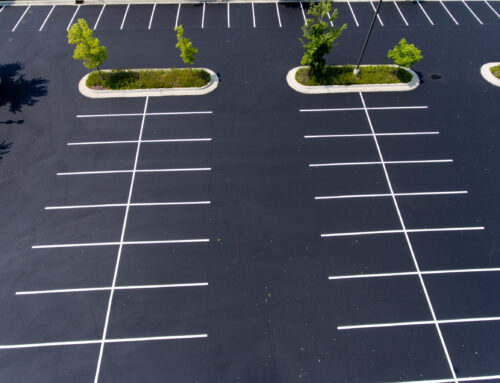
- Pavement striping. As part of commercial asphalt maintenance plans, we stripe your lot to your layout and code requirements once repairs and sealing are complete.
- Snow plowing. In winter, we keep your access clear in Kenosha, Pleasant Prairie, and Racine so customers and trucks can move safely.
Our team can walk your site, map truck paths, and create a maintenance plan that puts money where it matters most. Call Armored Asphalt at (262) 515-4150 or email armoredsealcoating@gmail.com to schedule a free on-site assessment.
Truck-Friendly Lot Design Tips You Can Use
Whether you manage a retail center, industrial facility, or distribution hub, a few design tweaks can reduce damage from heavy vehicles and lower your long-term costs.
- Designate truck lanes and loading zones with thicker asphalt mixes or reinforced sections.
- Use concrete pads at dumpsters, loading docks, and compactor areas where turning and point loads are extreme.
- Widen turning radii at corners so trailers do not grind curbs and edges.
- Install underdrains or improve grades where water collects in wheel paths.
- Place catch basins outside main wheel paths when possible.
- Separate car and truck circulation to limit conflicts and reduce wear in light-duty areas.
- Plan snow storage where meltwater drains away from heavy traffic zones.
Armored Asphalt can review your current layout and suggest targeted improvements that fit your site and budget. Small changes can make a big difference in the life of your commercial asphalt.
FAQs About Commercial Asphalt and Heavy Trucks
How much faster do trucks wear out a lot compared to cars?
A single pass of a fully loaded truck can equal the wear of thousands of car passes. Exact numbers vary by axle weight, tire type, and temperature, but the takeaway is clear. Where trucks drive, your pavement needs added strength and more frequent maintenance.
Do I need a different asphalt mix for loading docks?
Often yes. Mixes with stiffer binders and larger aggregate resist rutting and shoving better than standard parking lot mixes. The right choice depends on your traffic, base strength, and budget. Armored Asphalt can recommend a mix that fits your dock conditions.
How often should I sealcoat a truck-heavy lot?
In our climate, many commercial asphalt lots benefit from sealcoating every two to three years. High-load lanes may need touch-ups sooner. A professional assessment will set the right interval for your site.
What is the best fix for ruts?
If ruts are shallow and the base is sound, milling the top layer and repaving can restore a smooth surface. If the base is weak, a deeper repair is required. Armored Asphalt can test and advise on the right approach.
Is cold patch a permanent repair?
No. Cold patch is a good temporary fix for winter safety, but it should be replaced with hot mix patching in warm weather. Permanent hot mix repairs bond better and last much longer.
Where Armored Asphalt Works
Armored Asphalt proudly serves businesses and property owners throughout southeast Wisconsin and northeast Illinois. If your commercial asphalt needs attention, our local crews are ready to help in these communities and nearby areas:
- Kenosha
- Pleasant Prairie
- Paddock Lake
- Salem
- Burlington
- Union Grove
- Yorkville
- Raymond
- Caledonia
- Mount Pleasant
- Sturtevant
- Racine
- Winthrop Harbor
- Zion
- Beach Park
- Waukegan
- Gurnee
Not sure if you are in our service area. Call (262) 515-4150 and our team will confirm scheduling options for your location.
Plan Your Free Commercial Asphalt Assessment
Heavy truck traffic does not have to wreck your budget. With the right design choices and a proactive maintenance plan, your lot can stand up to daily loads while staying safe and attractive. Armored Asphalt is your local partner for paving, patching, sealcoating, crack filling, striping, and snow plowing. We combine proven methods with a customer-focused process that respects your time, operations, and tenants.
Let us walk your site, document high-load zones, and deliver a plan that extends the life of your commercial asphalt while controlling costs. Call Armored Asphalt at (262) 515-4150 or email armoredsealcoating@gmail.com to schedule a free assessment today. We look forward to protecting your pavement and your bottom line.