Asphalt repair contractors can help you understand when a pothole turns from nuisance to legal problem. Find out how deep a pothole must be before liability hits and when you could be sued. Protect your business and get the facts today. In this guide, Armored Asphalt explains the risk behind potholes, what standards many cities and insurers use, and the exact steps you can take to reduce exposure on your property. If you manage a driveway, parking lot, or private road in southeast Wisconsin or northeast Illinois, this is for you.
Important Note Before We Begin
This article gives general information for property owners and managers. It is not legal advice. Laws and local standards vary by city and state. If you face a potential claim, speak with an attorney. For fast, professional repairs that reduce your risk, contact Armored Asphalt, your local team in Kenosha and the surrounding region.
How Deep Does a Pothole Need To Be To Create Liability?
There is no single number that guarantees you will or will not be sued. Courts and insurers look at the entire situation. Depth matters, but so do notice, response time, lighting, traffic, and whether the defect was reasonably fixable. That said, industry guidelines and municipal standards offer helpful benchmarks for decision making.
Common Depth Thresholds Used By Cities and Insurers
- Sidewalk or pedestrian areas: A vertical change of 1/4 inch to 1/2 inch is often treated as a trip hazard. While this is not a pothole, it shows how small a defect can trigger attention when foot traffic is present.
- Parking lots and drive lanes: Depressions around 1 inch deep with broken edges can create a foreseeable risk of trips, twists, bicycle falls, and low-speed vehicle damage. Many property managers set 1 inch as the internal action trigger even if the law in their area is not specific.
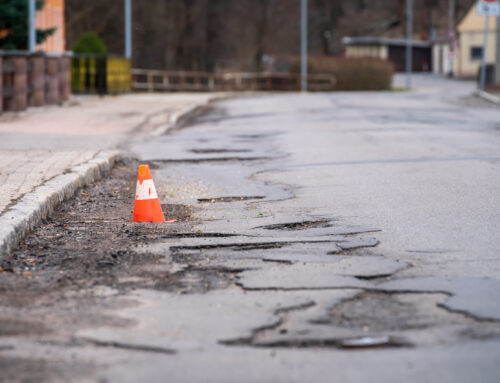
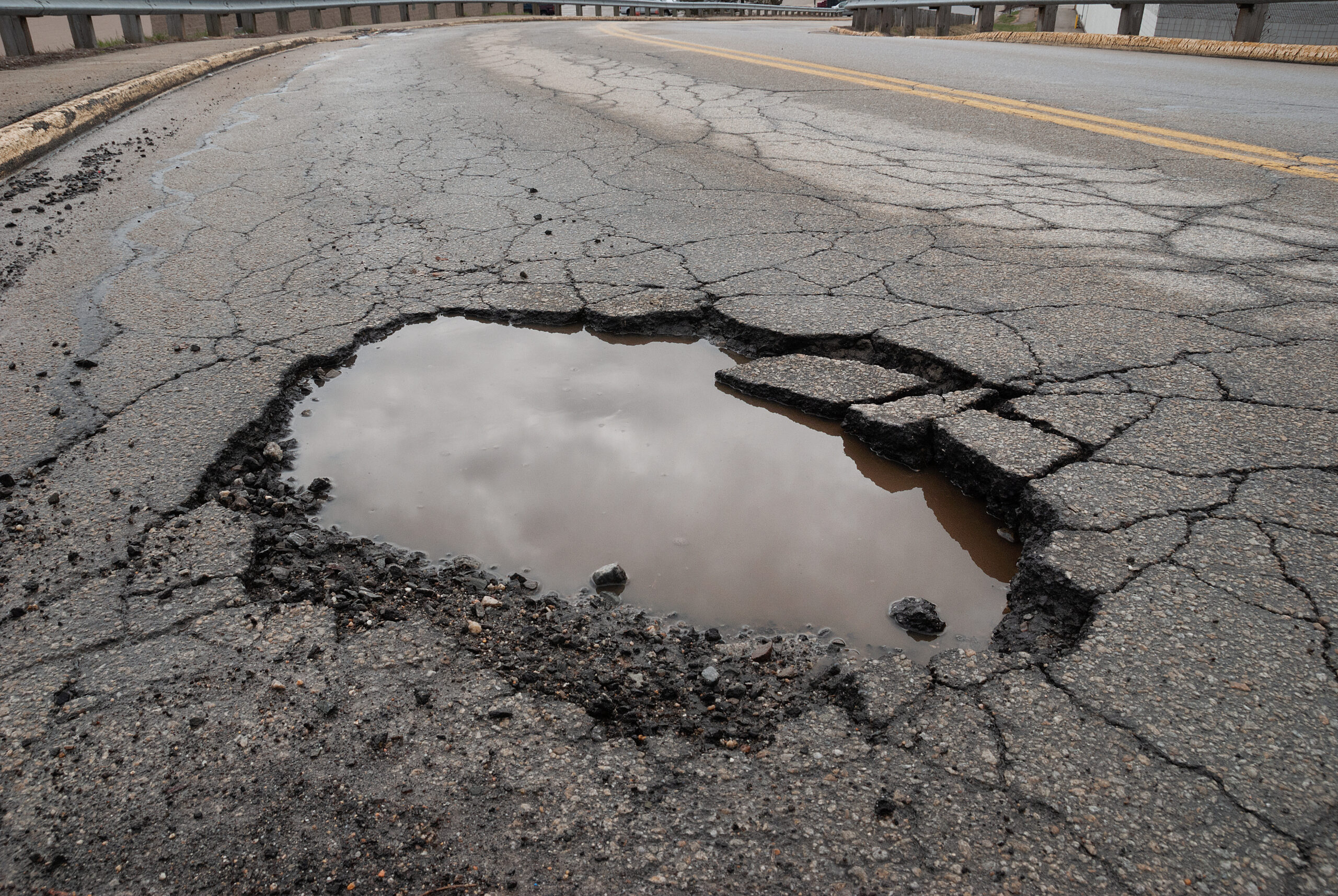
- Roadways and heavy traffic areas: Many municipalities classify a pothole as roughly 2 inches deep or more, often combined with a minimum width or length like 12 inches. Damage to rims, tires, and suspensions becomes more likely at this size, and liability risk rises if the owner knew about it and did not act.
These thresholds are not the law by themselves. They are common benchmarks that asphalt repair contractors, risk managers, and some public works departments use to prioritize repairs. In practice, smaller defects can still lead to claims if the conditions make them hazardous.
What Actually Gets Property Owners Sued
Most claims revolve around notice and reasonableness, not just depth. Owners and managers have a duty to take reasonable care of their property. If a pothole is dangerous, and you knew or should have known about it, and you did nothing or delayed unreasonably, liability risk increases. Consider these common factors.
- Notice and documentation: Were there prior complaints, incident reports, or service requests? Did you have photos or logs that show when the pothole appeared and when you responded?
- Response time: Did you put out cones, barricades, or signage within a reasonable time? Did you schedule a repair promptly or use a safe temporary fix?
- Location and use: Hazards in ADA routes, crosswalks, entrances, handicap stalls, loading areas, and drive-through lanes demand quicker action than low-traffic corners.
- Lighting and visibility: Poor lighting, puddles that hide depth, and faded striping make hazards harder to spot and increase risk.
- Weather and drainage: Freeze-thaw cycles and bad drainage grow potholes fast. If a defect is expanding, your response timeline should speed up.
- Prior repair quality: Low-quality patches can fail quickly. Consistent work by qualified asphalt repair contractors carries more weight with insurers than repeated quick fixes that do not hold.
What Insurers and Courts Often Look For
- Proof of a maintenance plan: Do you have a written inspection schedule and a process to log and prioritize defects?
- Timely mitigation: Did you mark the hazard clearly and reduce exposure while waiting for permanent repair?
- Qualified repairs: Did you use reputable asphalt repair contractors who follow accepted methods and materials appropriate to the season?
- Reasonable timing: Did you fix the defect as soon as weather and operations allowed, especially where the risk to people or vehicles was high?
- Clear communication: Did you notify tenants, employees, delivery drivers, and guests if traffic patterns changed due to a hazard?
When To Act: A Practical Decision Guide
Use these practical triggers to decide the next step on your property. When in doubt, choose the safer path. Armored Asphalt can help you evaluate, prioritize, and execute repairs that meet your risk tolerance and budget.
- Immediate hazards: 2 inches deep or more, sharp or crumbling edges, located in ADA routes, crosswalks, main entrances, or heavy traffic lanes. Action: barricade or cone the area the same day. If winter temperatures block hot mix repairs, use cold patch temporarily and schedule a permanent hot mix fix as soon as conditions allow.
- Moderate defects: 1 to 2 inches deep, or less than 2 inches but in a high-risk location such as curb ramps, pedestrian paths, or tight turning areas. Action: mark the area within 24 hours, schedule a repair within a few days, or sooner if traffic is heavy.
- Early-stage failures: Alligator cracking, depressions less than 1 inch, raveling, or open cracks. Action: fill cracks first, address drainage, and plan sealcoating to stop water infiltration before winter. This greatly reduces future potholes.
Winter vs Warm-Weather Repairs
In cold months, cold patch is a strong temporary option. It keeps water out and protects tires and feet until spring. Once plants open and temperatures rise, permanent hot mix patching should follow. Armored Asphalt performs both methods. We cold patch through winter to control risk, then return for hot mix repairs and sealcoating as soon as the weather is right. For commercial clients in Kenosha, Pleasant Prairie, and Racine, our snow plowing service also keeps surfaces clean so hazards remain visible.
How Pros Measure a Pothole
Accurate measurements help with decisions, budgeting, and documentation. Asphalt repair contractors follow simple but reliable steps.
- Depth: Place a straightedge or board across the edges of the pothole. Use a ruler or tape to measure from the underside of the straightedge to the deepest point. Take at least two measurements and record the largest number.
- Size and shape: Measure the widest length and width. Note if the hole is round, oval, or irregular. Record any cracks radiating out or spalled edges that suggest a growing failure.
- Location and context: Note whether the hazard is in a pedestrian path, ADA route, traffic lane, or near a drain. Take photos that show both the defect and the surroundings.
- Contributing causes: Look for standing water, gutter overflows, downspout discharge, plow scars, or oil damage. Addressing the cause is as important as fixing the hole.
- Action taken: Log the date, time, and what you did, such as coning off, adding signage, or scheduling Armored Asphalt for a repair.
The Business Case For Fixing Potholes Early
Early fixes cost less and reduce claims. A small crack lets water reach the base layer. Freeze-thaw cycles push the asphalt up and tear it apart. Traffic pounds the weak spot until a pothole opens. Patching early with hot mix and sealing the surface keeps water out and preserves the base, which is where the real money is invested. Quick response also protects your brand. Customers, tenants, and employees notice safe, clean lots. Fresh sealcoating and clear striping guide traffic and reduce confusion. Clear ADA markings are not just smart; they are often required. Armored Asphalt builds maintenance plans that combine crack filling, sealcoating, and timely patching so you can stretch your budget and show you take safety seriously.
What Asphalt Repair Contractors Recommend
Experienced asphalt repair contractors agree on a few best practices that shrink your liability window and extend pavement life. At Armored Asphalt, we set schedules around your operations, weather, and risk tolerance so your lot stays open and safe.
- Use a two-coat sealcoating system on a healthy surface every few years. It restores the protective barrier and helps your pavement last roughly twice as long between sealing compared to a single coat.
- Fill cracks before you seal. Rubberized crack fill bonds and stretches, creating a tight surface seal that blocks water. Recheck high-movement cracks before winter each year.
- Choose hot mix patching for a permanent pothole solution when temperatures allow. For winter, a quality cold patch keeps people safe and slows damage until hot mix is possible.
- Stripe after sealing and repair. Fresh markings improve traffic flow, highlight pedestrian paths, and keep your lot compliant with your parking specifications.
- Plan for snow. Snow plowing that protects curbs, drains, and edges prevents many spring potholes. Our commercial clients in Kenosha, Pleasant Prairie, and Racine rely on our careful plow technique and prompt service.
How Armored Asphalt Reduces Your Liability
Armored Asphalt is a local asphalt paving and maintenance company based in Kenosha, Wisconsin. We serve homeowners and businesses throughout southeast Wisconsin and northeast Illinois. Our team focuses on quality materials, clear communication, and scheduling that respects your business hours. When you choose Armored Asphalt, you get support from asphalt repair contractors who understand both pavement science and real-world risk management.
- Paving: We install durable, smooth blacktop for driveways and parking lots that stands up to Midwest weather.
- Patching and pothole repair: We deliver permanent hot mix patching and winter cold patching for areas up to 10 inches by 20 inches and beyond, depending on the need.
- Sealcoating: Our two-coat sealcoating restores protection and curb appeal so your surfaces resist water and oxidation longer.
- Crack filling: We use high-grade rubberized crack fill that should be applied before sealcoating and again as needed before winter.
- Pavement striping: After we repair and seal, we stripe to your parking specifications for clarity and compliance.
- Snow plowing: In winter we offer commercial plowing in Kenosha, Pleasant Prairie, and Racine, keeping driveways, lots, and sidewalks clean for safe access.
We service Kenosha, Pleasant Prairie, Paddock Lake, Salem, Burlington, Union Grove, Yorkville, Raymond, Caledonia, Mount Pleasant, Sturtevant, Racine, Winthrop Harbor, Zion, Beach Park, Waukegan, and Gurnee. Call Armored Asphalt at (262) 515-4150 or email armoredsealcoating@gmail.com to schedule an assessment or repair.
Simple Inspection Checklist For Property Managers
- Walk your pavement monthly, after major storms, and at winter’s end.
- Inspect high-risk areas first: building entrances, ADA routes, handicap stalls, crosswalks, loading zones, and drive-throughs.
- Measure and log defects: note depth, size, and exact locations. Add photos and mark the spot on a site map.
- Mitigate promptly: cone, barricade, or mark hazards as soon as you find them.
- Prioritize: fix 2 inch hazards immediately, schedule 1 to 2 inch defects within days, and address cracks and drainage before the next freeze.
- Contact Armored Asphalt to coordinate temporary cold patching in winter and permanent hot mix patching as weather improves.
FAQs
Can I be sued if someone trips in a shallow pothole?
Yes. If the area is poorly lit, in a walking path, or hidden by water, even a shallow defect can lead to a claim. The key issues are notice, visibility, and reasonable response. Mark hazards quickly and call asphalt repair contractors for a plan.
Does sealcoating prevent potholes?
Sealcoating protects the surface from water and sun, which slows the cycle that leads to potholes. It works best when paired with timely crack filling and sound drainage. It will not fix structural failures, but it extends life and reduces future risk.
What if my asphalt is 20 years old or more?
Older pavements often need more than patching. You may benefit from milling and resurfacing or targeted base repairs. Armored Asphalt can inspect, core if needed, and recommend the right approach for safety and budget.
What if I cannot get hot mix in winter?
Use a quality cold patch to reduce risk, then schedule a permanent hot mix repair as plants reopen. Cones and signs help, but they do not replace a physical fix. Our crews handle both steps and return in spring to make it last.
Service Areas
Armored Asphalt serves southeast Wisconsin and northeast Illinois with responsive, high-quality work from local professionals. We regularly work in the following communities:
- Kenosha
- Pleasant Prairie
- Paddock Lake
- Salem
- Burlington
- Union Grove
- Yorkville
- Raymond
- Caledonia
- Mount Pleasant
- Sturtevant
- Racine
- Winthrop Harbor
- Zion
- Beach Park
- Waukegan
- Gurnee
Bottom Line: Do Not Wait For Two Inches
Waiting until a pothole hits 2 inches deep is risky. Many claims arise from smaller defects in sensitive locations. If you know about a hazard, act fast, mark it, and schedule a repair. Asphalt repair contractors like Armored Asphalt can deploy quick temporary fixes in winter and lasting hot mix patches in warm weather, all backed by a maintenance plan that includes crack filling, sealcoating, and striping.
Contact Armored Asphalt
Protect your customers, your vehicles, and your budget with proactive repairs and clear documentation. Call Armored Asphalt at (262) 515-4150 or email armoredsealcoating@gmail.com to request an assessment and repair plan. Our team is ready to help you cut liability, extend pavement life, and keep your property looking and performing its best.