When snow melts in Wisconsin, the worst damage in your parking lot often shows up fast. The thaw exposes cracks, potholes, and faded lines, and spring rain makes it all worse. If you own or manage a property in southeast Wisconsin or northeast Illinois, it is smart to get ahead of parking lot winter damage before it grows. Armored Asphalt in Kenosha specializes in fast assessments and reliable repairs that protect your pavement, your customers, and your budget.
Why Spring Makes Parking Lot Winter Damage Worse
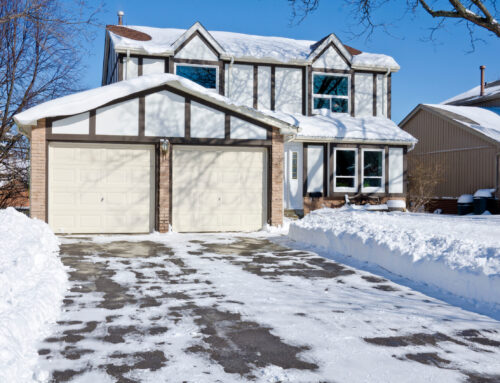
Wisconsin winters are tough on asphalt. Temperatures swing from below freezing to above freezing, which causes water to expand and contract inside the pavement. Plows scrape, deicers react with the surface, and spring rain saturates weakened areas. By April, small flaws from fall can turn into safety hazards that frustrate drivers and cost more to fix.
- Freeze-thaw cycles: Water slipping into tiny cracks freezes, expands, and breaks the asphalt apart. When it thaws, the gap is larger and more water gets in. This cycle repeats many times each winter.
- Plow blade scarring: Even skilled operators can scrape high spots or edges, removing protective sealcoat and loosening aggregate. Over time, this contributes to raveling and new cracks.
- Deicer impact: Salt and other deicers keep ice under control but can dry out the binder near the surface. This accelerates raveling and opens pathways for water.
- Standing water: Snowbanks trap meltwater. Poor drainage or a sunken catch basin can leave puddles that seep into the base and weaken the structure.
- Heavy loads: Delivery trucks and daily traffic carve grooves and stress weak spots. As the base softens in the spring, that stress turns into rutting and potholes.
Common Signs Your Lot Took a Hit This Winter
Potholes and Blowouts
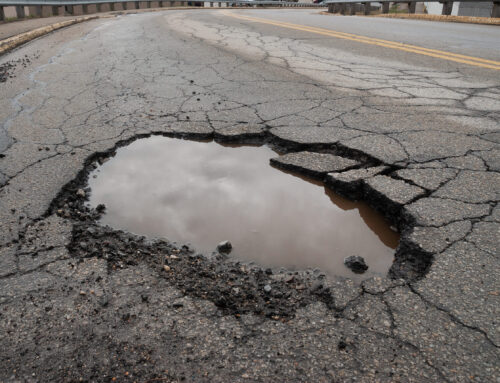
Potholes form when water weakens the base and traffic pops out chunks of asphalt. Spring speeds up this process, and a small pit can become a deep hole in a matter of days. Potholes are rough on tires and suspensions, and they create a real trip hazard. Armored Asphalt repairs potholes with hot mix patching for a durable fix, and we can apply cold patch during colder months as a temporary solution.
Alligator Cracking and Linear Cracks
Alligator cracking looks like scales in a tight pattern. It signals a weakened base or old pavement that can no longer carry loads. Linear cracks include transverse cracks that cross the drive and longitudinal cracks that run with traffic. In spring, these cracks widen and link together. The sooner you fill them with rubberized crack-fill, the longer your pavement will last. Crack filling should come before sealcoating to create a tight seal.
Raveling and Loose Aggregate
Raveling shows up as a rough, grainy surface that sheds stones. It often follows blade scarring, deicer use, or UV damage over time. Raveling grows quickly with spring traffic. If left alone, it invites more water into the surface. Sealcoating can arrest light raveling while a thin overlay or patching may be needed in worse areas.
Pavement Heaving and Depressions
Heaving happens when trapped moisture freezes beneath the surface and expands upward. Depressions and birdbaths are low spots where water collects. The freeze-thaw cycle exaggerates both. You will notice puddles that linger after a rain. These areas need leveling and patching to restore proper drainage.
Edge Breakdown and Trip Hazards
Snow piles and blade passes are hard on edges. When vehicles roll off the edge, the unsupported corner can crumble. That edge breakdown spreads down the side and creates a jagged trip hazard. Prompt edge repairs and proper striping help keep drivers off weak shoulders.
Drainage and Catch Basin Failures
When catch basins settle or crack, water stops draining as it should. In spring, you may see water swirling but not dropping into the basin, or the frame may sit lower than the surrounding asphalt. Catch basin failures lead to base erosion and sinkholes. Quick attention prevents costly reconstruction.
Faded Striping and Lost ADA Compliance
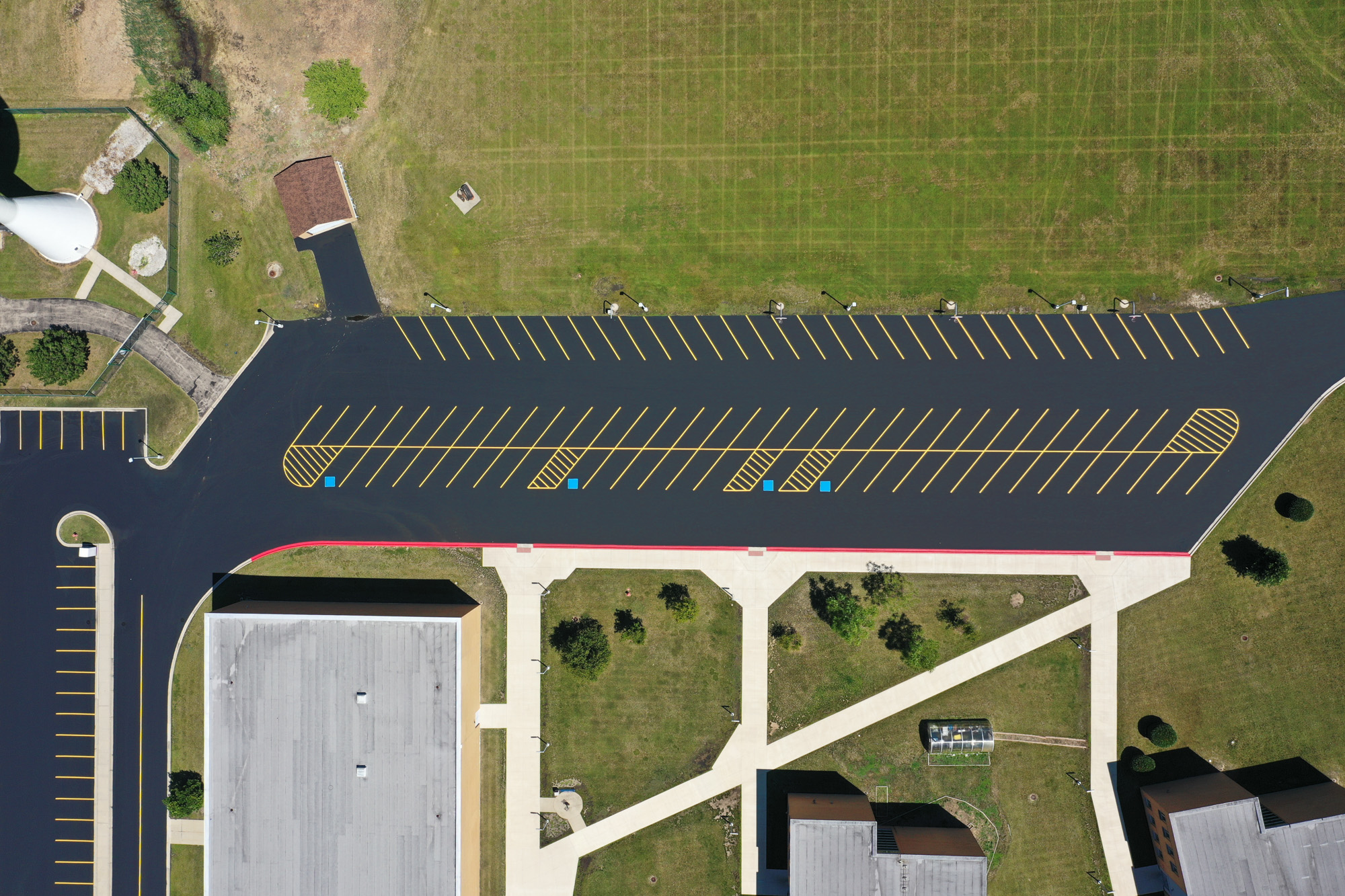
Frost, salt, and plow traffic erode paint. By spring, your lines, directional arrows, and accessible parking symbols are often hard to see. Poor striping confuses drivers and can expose a business to ADA compliance issues. After repairs and sealing, new pavement striping restores traffic flow and safety standards.
Fast Fixes vs Lasting Solutions
Not every problem needs a full rebuild. The right repair matched to the damage saves time and money. Armored Asphalt offers practical options for every stage in the season.
- Cold patch for winter holds: When temperatures are low, cold patch can fill potholes and improve safety. It is a temporary fix that keeps your lot usable until hot mix patching is possible. We can patch areas up to 10” x 20” quickly to keep operations moving.
- Hot mix patching for durability: Once the plant opens and weather allows, hot mix patching creates a strong, permanent repair. We saw-cut edges, remove loose material, compact the base, and install new hot mix asphalt for a smooth, long-lasting finish.
- Rubberized crack filling: High-grade crack-fill stretches with temperature changes and seals out water. It is best to fill cracks before sealcoating and to recheck them each fall before winter.
- Two-coat sealcoating: A fresh two-coat sealcoat shields asphalt from UV rays, water, and salt. It also restores dark color and a smooth, clean look. Lots maintained on a regular sealcoat cycle often last twice as long between major projects.
- Targeted milling and resurfacing: If an area is too far gone for patching or crack fill, a thin mill and pave removes failed layers and restores a strong, even surface.
- Drainage corrections: Fixing low spots, improving slopes, and addressing catch basin issues prevents water from undoing your repairs.
- Pavement striping: Once repairs are complete, fresh striping improves safety and compliance. Armored Asphalt stripes to your specific parking plan, including ADA spaces, crosswalks, and directional markings.
The Spring Parking Lot Inspection Checklist
You can spot most trouble with a careful walk-through. Use this simple checklist right after the melt.
- Walk the perimeter and drive lanes. Mark any potholes, cracks, or loose areas.
- Check edges and entrances for broken shoulders and crumbling corners.
- Look for standing water after rain. Note birdbaths and soft spots.
- Inspect catch basins for settling, cracking, or missing mortar around frames.
- Photograph trouble spots and measure rough sizes to guide the estimate.
- Review striping and signage for wear. Confirm ADA stalls, access aisles, and routes are visible.
- Note high-traffic zones like loading docks and drive-thru lanes that may need heavier attention.
- Flag safety hazards that need immediate repair, such as sharp edges and deep potholes.
- Set a repair budget and prioritize fixes that stop water intrusion first.
- Call Armored Asphalt at (262) 515-4150 or email armoredsealcoating@gmail.com to schedule a professional inspection and plan.
How Armored Asphalt Restores Your Lot
Step 1: Thorough Assessment and Clear Estimate
Our team in Kenosha listens to your needs, walks the site, and documents damage. We explain the cause of each issue and provide a clear, itemized estimate. You will understand what is urgent, what can wait, and how each fix protects your pavement.
Step 2: Crack Filling and Targeted Patching
We start by sealing cracks with high-grade rubberized crack-fill to shut out water. Next comes patching. In warm weather we use hot mix patching for lasting performance. In late winter or early spring, we can apply cold patch to make areas safe until temperatures allow hot mix. Our process focuses on proper base support so repairs hold up under traffic.
Step 3: Sealcoating for Protection
Armored Asphalt applies a two-coat sealcoat that shields against sun, water, and salt. The finish looks clean and professional, and the protective layer helps your lot last longer between major repairs. Sealcoating also makes snow removal easier next winter because the surface is smoother and less porous.
Step 4: Pavement Striping and Traffic Flow
Once the surface cures, we stripe the lot to your plan. We mark stalls, drive lanes, arrows, no-parking zones, and ADA spaces with proper layout and spacing. Fresh striping reduces confusion and keeps traffic moving safely through your property.
Step 5: Maintenance Plan for Every Season
Parking lot winter damage is easier to manage with a plan. We schedule crack filling before winter, sealcoating on a regular cycle, and inspections after big weather swings. Our commercial maintenance plans include striping and seasonal attention so your lot stays safe and presentable year-round.
Preventing Parking Lot Winter Damage Next Year
You cannot stop snow and cold, but you can make your pavement ready for the season. A little prevention in late summer and fall goes a long way.
- Fix cracks before winter. Sealed cracks keep water out and prevent the freeze-thaw cycle from tearing your surface apart.
- Sealcoat on schedule. A two-coat application every few years protects against UV, water, and salt while restoring curb appeal.
- Reinforce edges. Add support where vehicles tend to drop off and adjust striping to keep drivers centered in lanes.
- Clean drains and check slopes. Make sure water has a path away from your lot so it cannot pool and soak into the base.
- Coordinate with your plow provider. Ask for shoes on blades and post plow markers around catch basins, islands, and curbs. Armored Asphalt also offers commercial snow plowing in Kenosha, Pleasant Prairie, and Racine to keep access safe all winter.
- Use deicers wisely. Apply the right amount and sweep leftover material in spring to reduce surface wear.
- Plan quick temporary fixes. If a pothole appears midwinter, a timely cold patch can prevent a much larger failure.
Why Choose Armored Asphalt in Wisconsin
Armored Asphalt is a local paving and maintenance company based in Kenosha. We serve homeowners and businesses across southeast Wisconsin and northeast Illinois, including Pleasant Prairie, Paddock Lake, Salem, Burlington, Union Grove, Yorkville, Raymond, Caledonia, Mount Pleasant, Sturtevant, Racine, Winthrop Harbor, Zion, Beach Park, Waukegan, and Gurnee. Our team knows how Midwest winters affect asphalt and how to fix it right.
- Local expertise: We understand freeze-thaw damage, salt use, and spring drainage issues common in our region.
- Full-service solutions: Paving, hot mix patching, cold patching, crack filling, sealcoating, and striping are all handled by one trusted crew.
- Quality materials: We use high-grade rubberized crack-fill and a proven two-coat sealcoat system for strong protection.
- Clear communication: We explain options, set expectations, and schedule work to reduce disruption to your business.
- Safety and compliance: We help you maintain ADA markings and clear traffic flow for a safer property.
- Customer-focused approach: Your goals guide our plan, from quick safety fixes to long-term pavement management.
FAQs About Spring Parking Lot Repairs
How soon can we repair after the snow melts?
We can inspect right away. Cold patch can be placed in cooler temperatures for temporary safety. As soon as asphalt plants open and the weather is stable, we schedule hot mix patching, crack filling, sealcoating, and striping for long-lasting results.
Is sealcoating enough to fix cracks?
No. Sealcoating protects the surface but does not fill or bridge active cracks. Cracks should be cleaned and filled with rubberized crack-fill before sealcoating to block water and keep the seal tight.
How long do repairs last?
With proper base support, hot mix patches can last many years. Crack filling typically lasts one to three years depending on movement and traffic. Sealcoating, when applied in two coats, can protect for two to three years before reapplication is due. Regular maintenance extends the life of every repair.
What causes potholes to come back?
Recurring potholes point to a weak base, poor drainage, or heavy loads in that area. If a pothole returns, we look deeper at the base and water flow. A more robust repair like milling and resurfacing or drainage correction may be needed.
Will repairs disrupt my business?
We stage work to keep you open. Our crews can handle projects in phases, cone off small sections, and schedule during off-peak hours. We will review a plan that fits your traffic and minimizes downtime.
Get Your Spring Inspection on the Books
Parking lot winter damage gets more expensive the longer it waits. A quick spring inspection with Armored Asphalt can stop small issues from turning into major headaches. Whether you need a safe temporary patch, a durable hot mix repair, fresh crack filling, a two-coat seal, or full parking lot striping, our Kenosha team is ready to help. Call (262) 515-4150 or email armoredsealcoating@gmail.com to schedule your assessment. We proudly serve southeast Wisconsin and northeast Illinois, from Kenosha and Racine to Waukegan and Gurnee. Let Armored Asphalt protect your pavement so your property stays safe, clean, and welcoming all year.